A land still
being made.
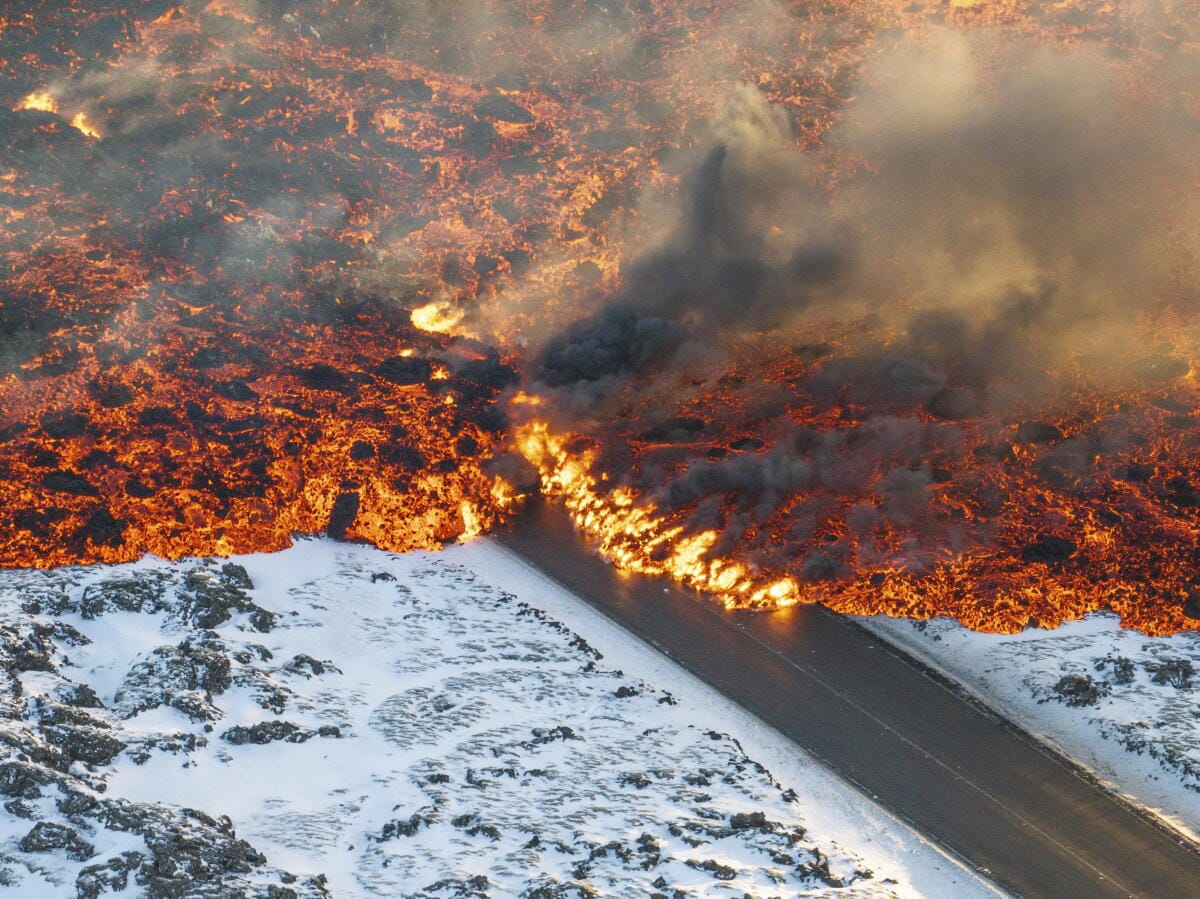
Iceland is young, geologically speaking. Glaciers grind rock into black sand, rivers cut new paths every spring, and volcanoes have redrawn the coastline within living memory. Nothing here is finished.
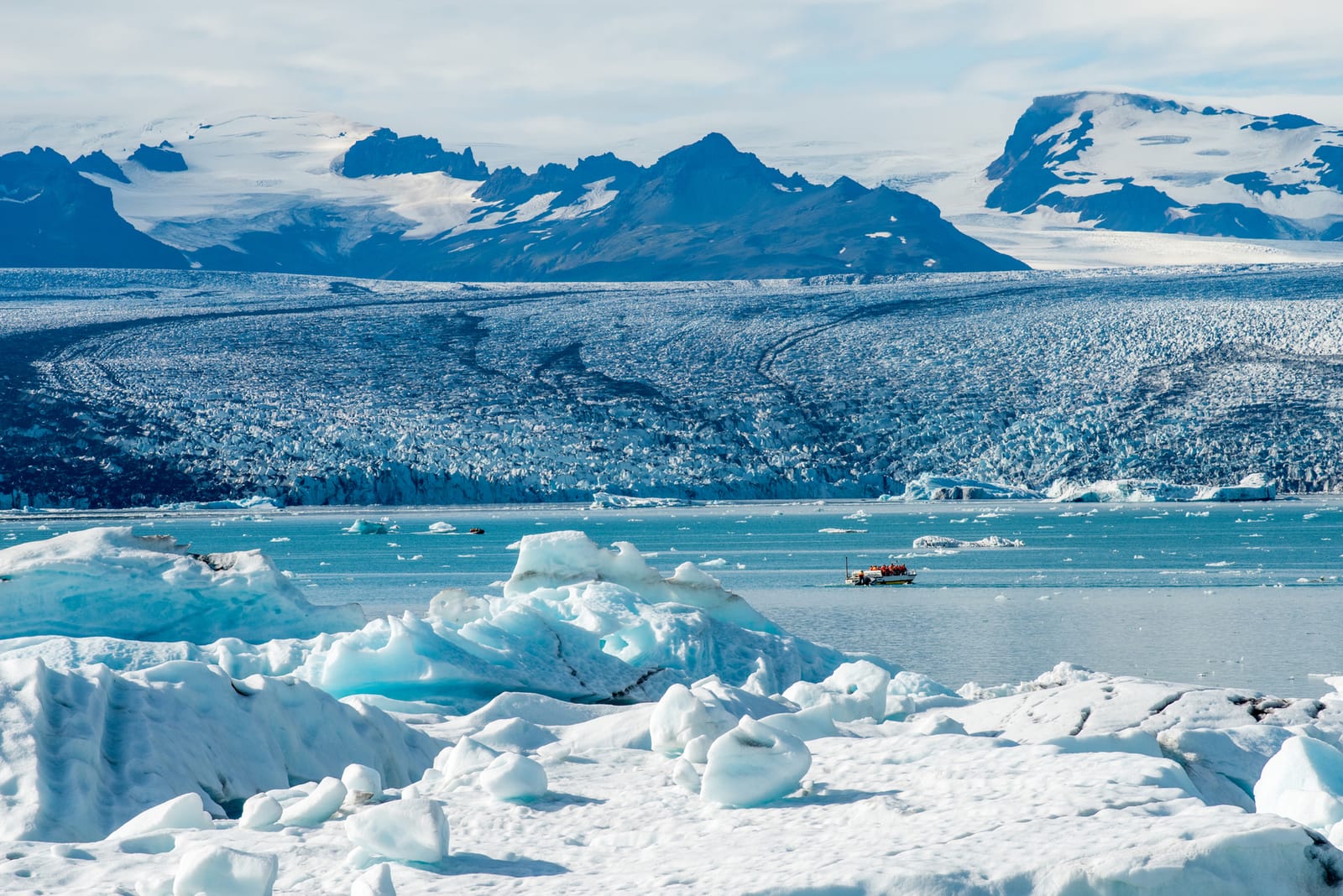
Ancient glaciers, carved by thousands of years of pressure and time.
Iceland sits on two tectonic plates, drifting a little further apart every year.
Volcanic highlands and geothermal fields simmer just beneath the surface.
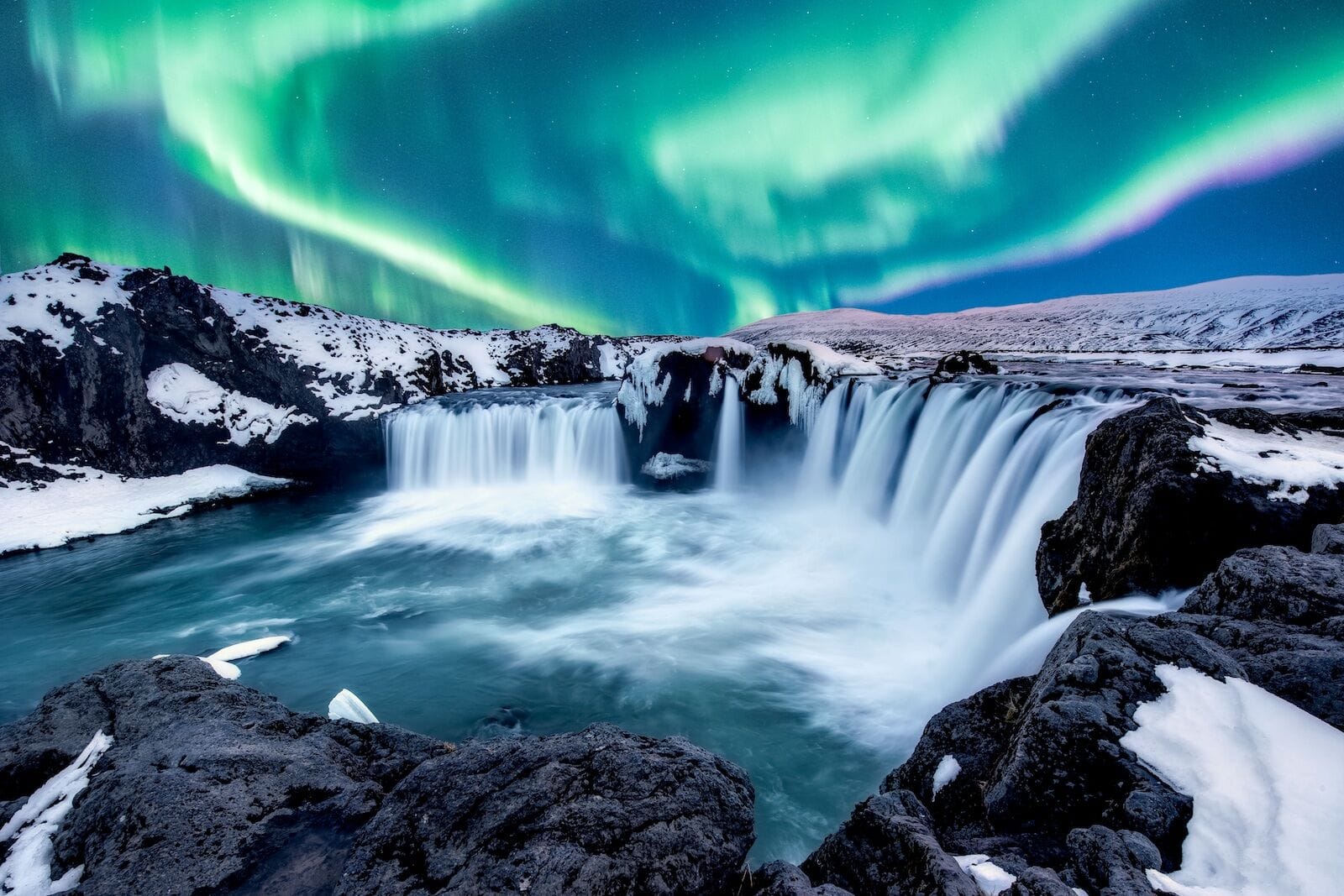
On clear winter nights, the aurora moves slowly, like something breathing.
Geothermal lagoons hold near 38°C, whatever the weather is doing above them.
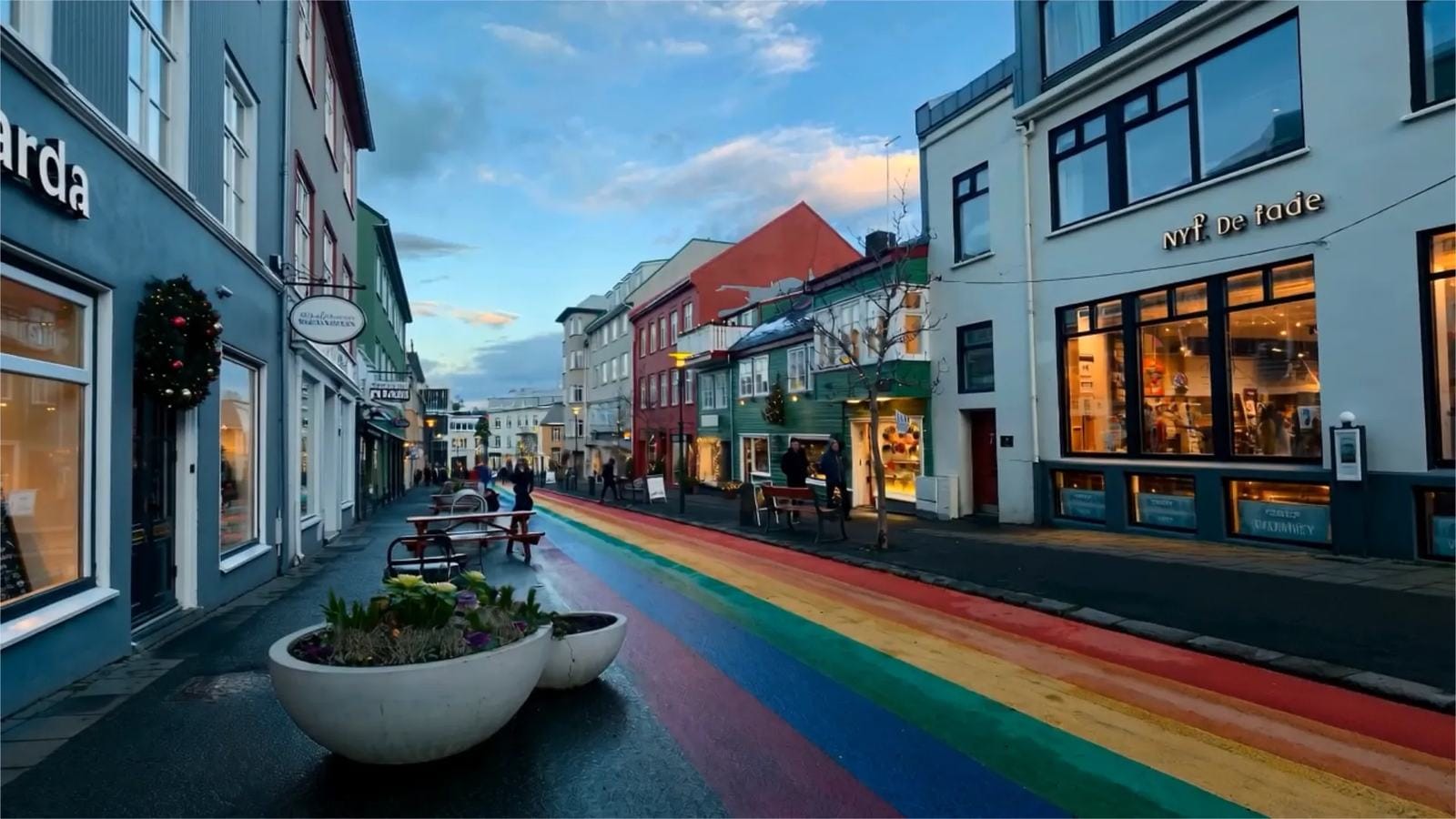
The flight ends where the wilderness gives way to Reykjavík's quiet streets.
Iceland is young, geologically speaking. Glaciers grind rock into black sand, rivers cut new paths every spring, and volcanoes have redrawn the coastline within living memory. Nothing here is finished.
Rivers of it, moving slower than the eye can measure.
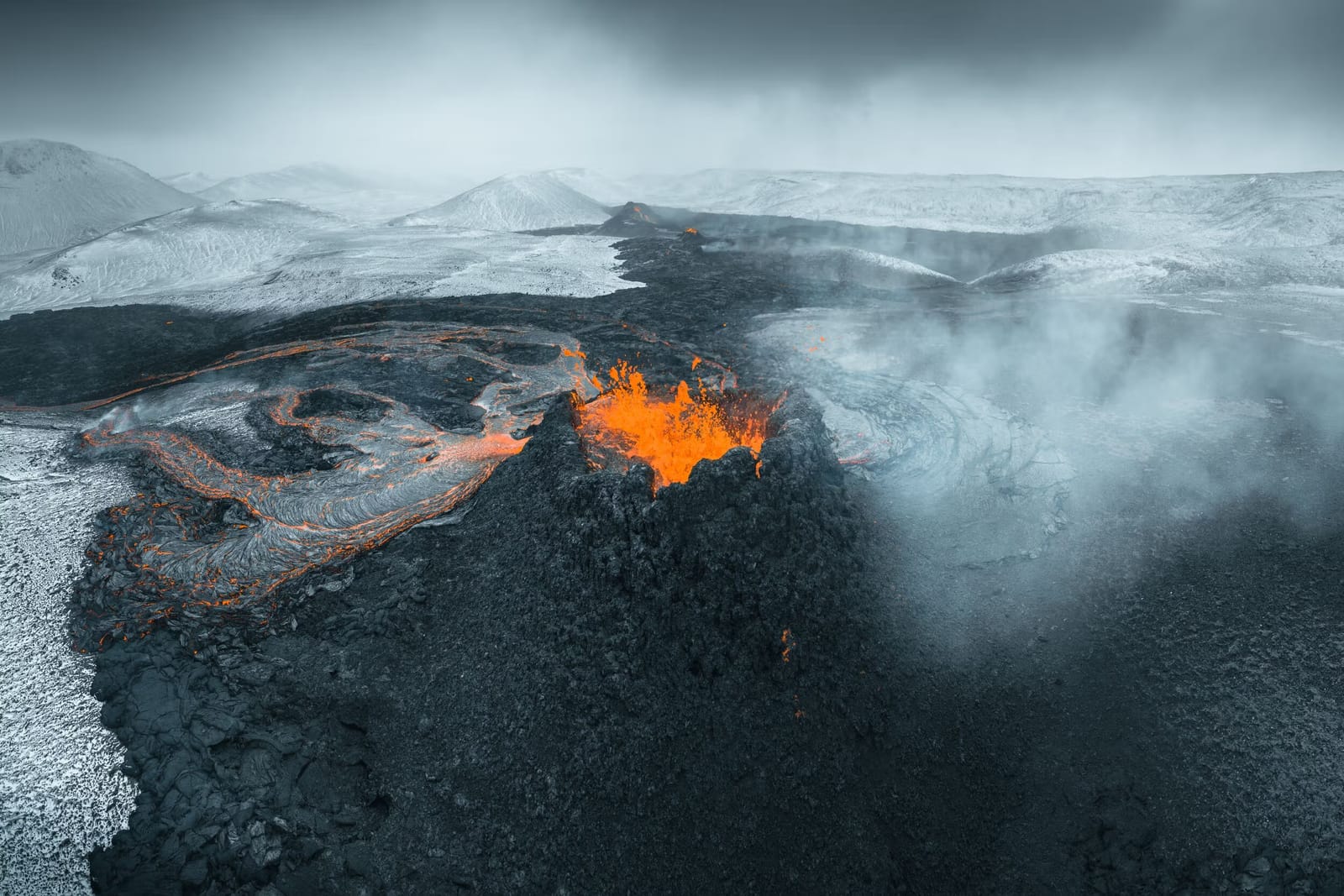
Colors across the highlands that no filter quite explains.
Hot springs fed by the same heat that shapes the land.
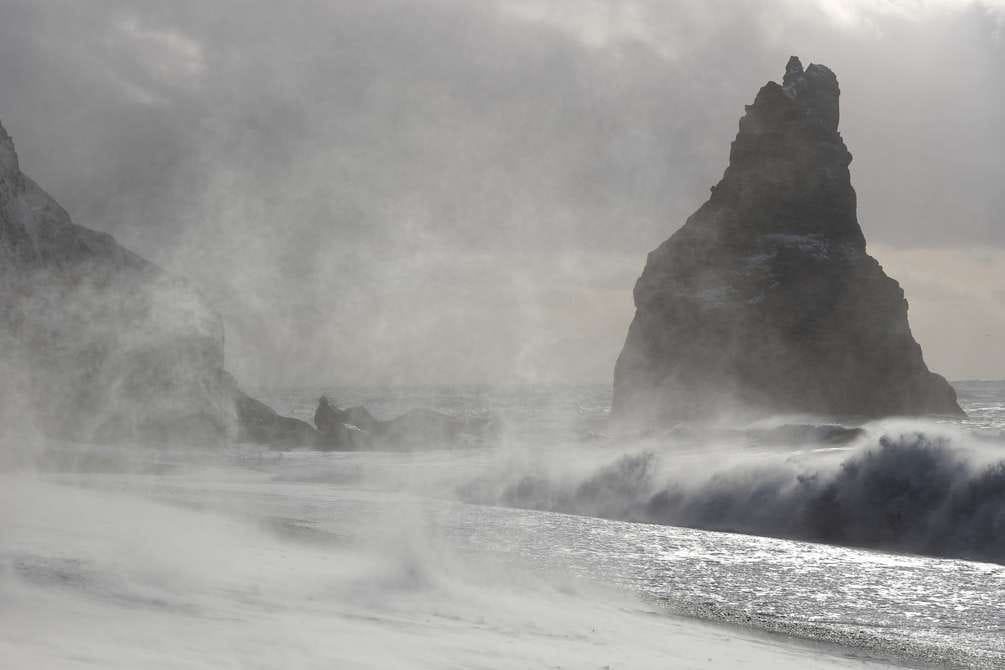
Weather that can change its mind four times before lunch.
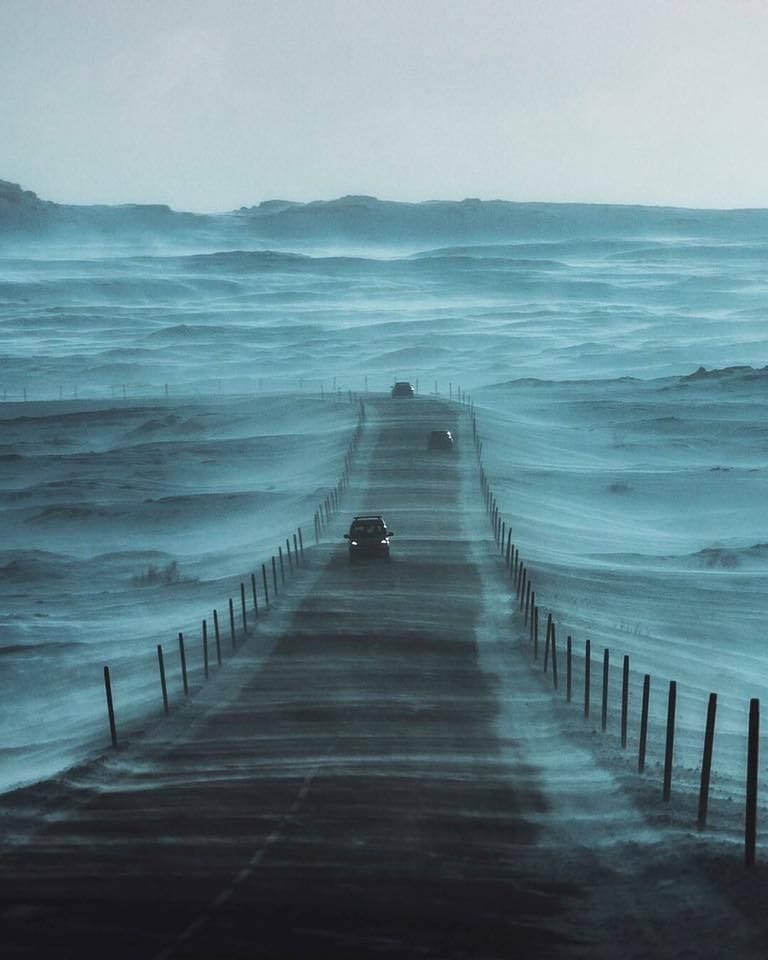
Most of what matters in Iceland sits along a single ring road. Here, the driving is the itinerary — not the gap between the stops.
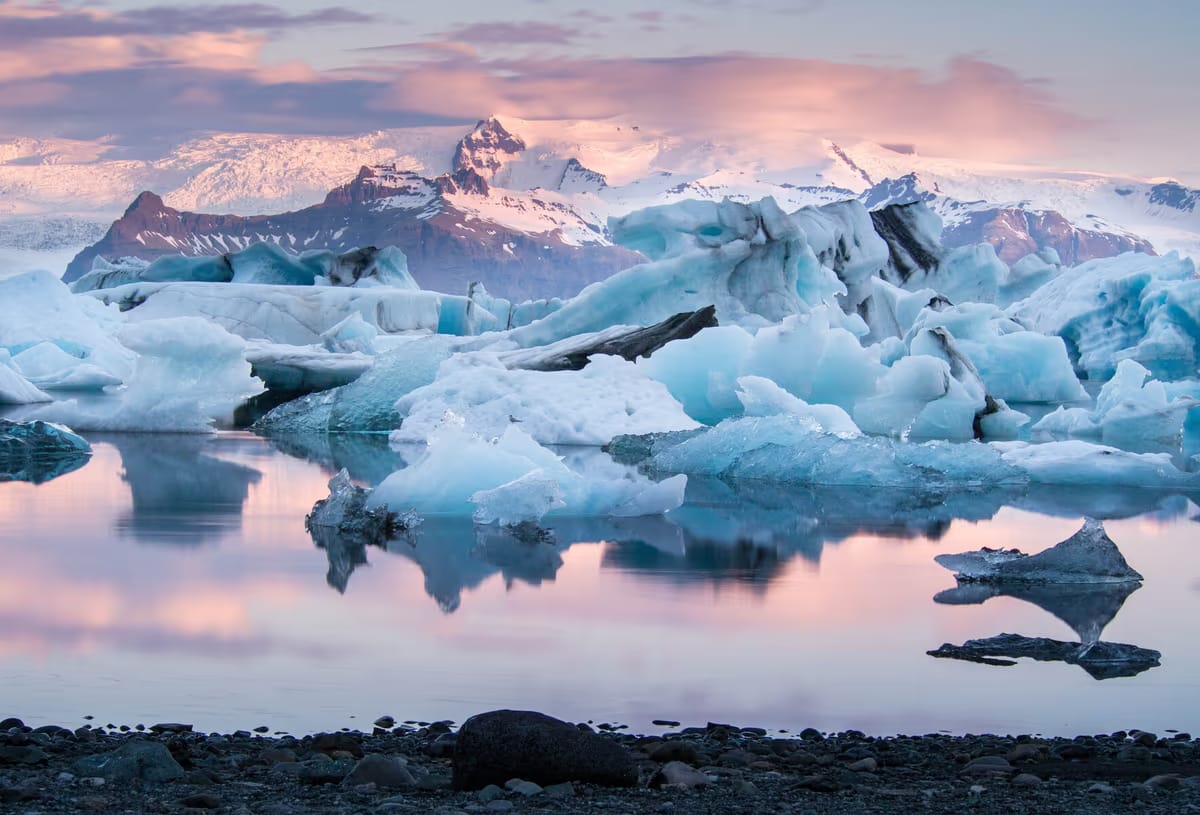
A glacier lagoon where centuries-old ice breaks free and drifts out toward the sea.
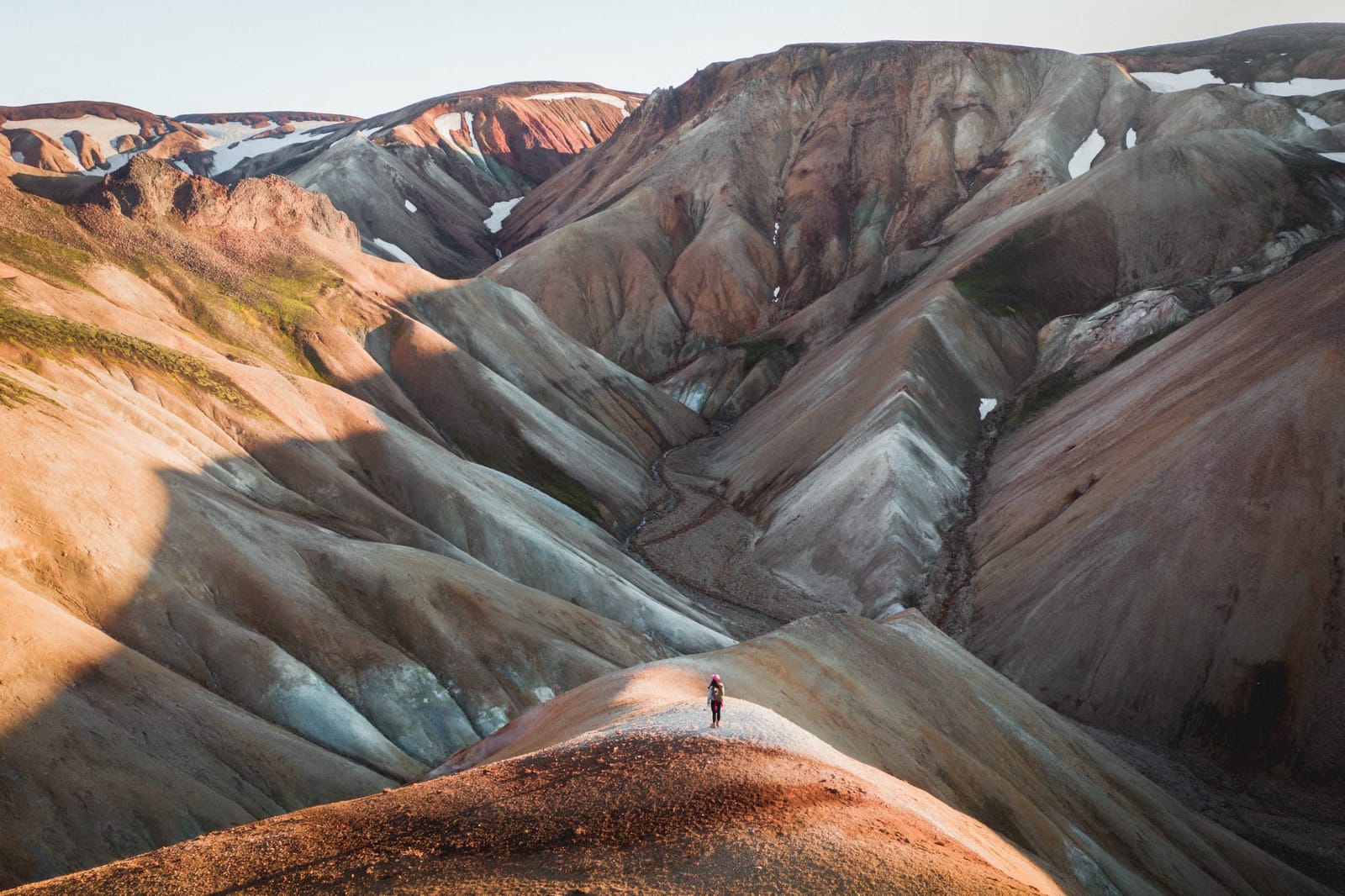
Rhyolite mountains in colors that look mixed by hand, not grown from rock.
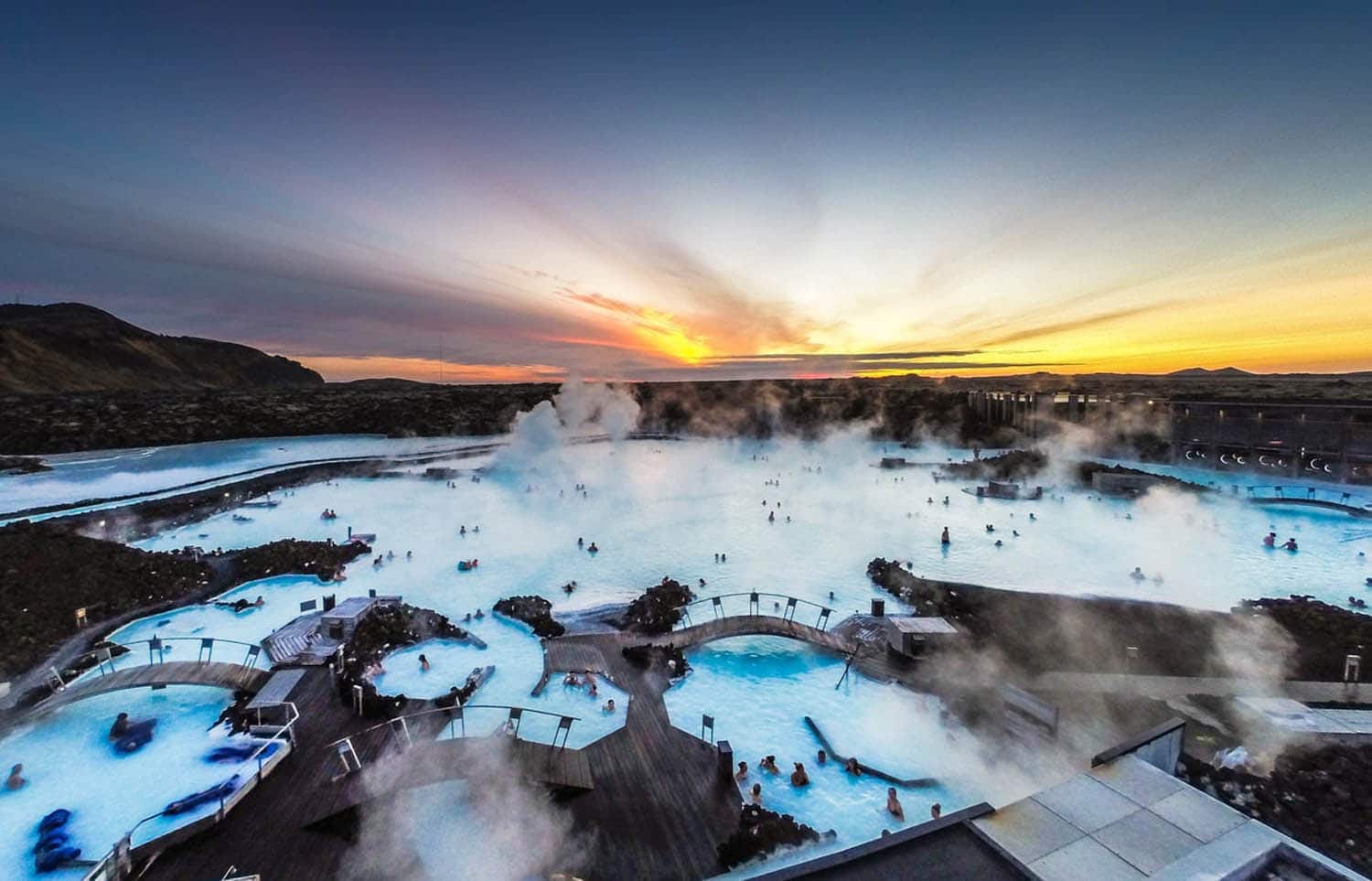
A geothermal spa set inside a lava field, steaming through every season.
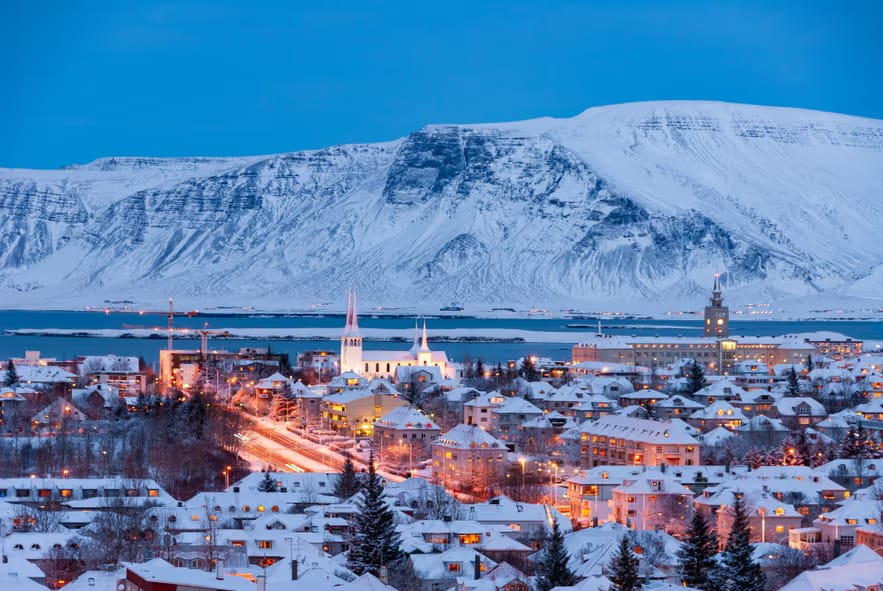
The world's northernmost capital — small enough to walk end to end.
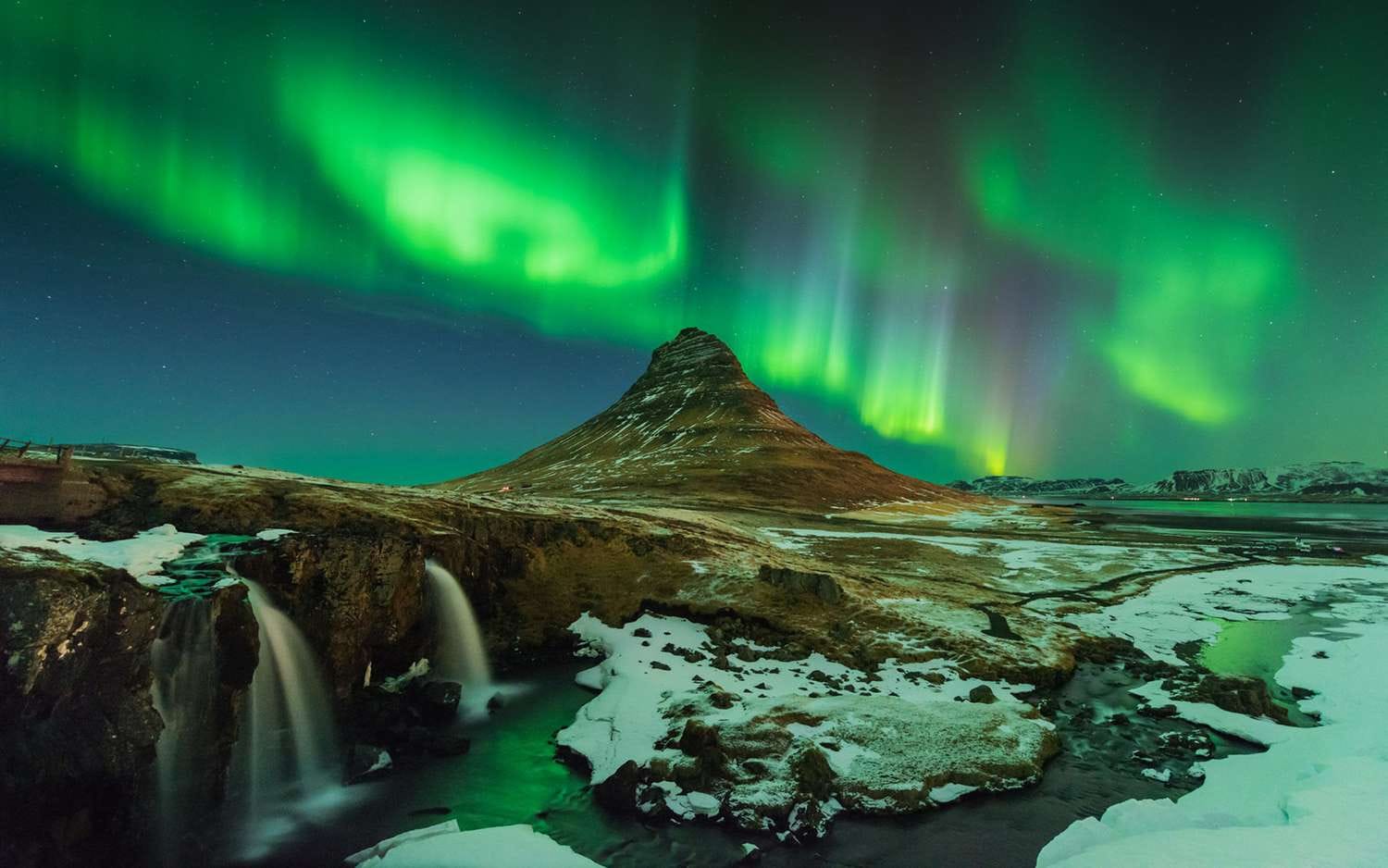
No two auroras look the same — and no photo quite does either.
September to March for the aurora and quiet roads. June to August for the long light and easier driving.
7, 10, or 14 days — depending on how much of the ring road you want to see.